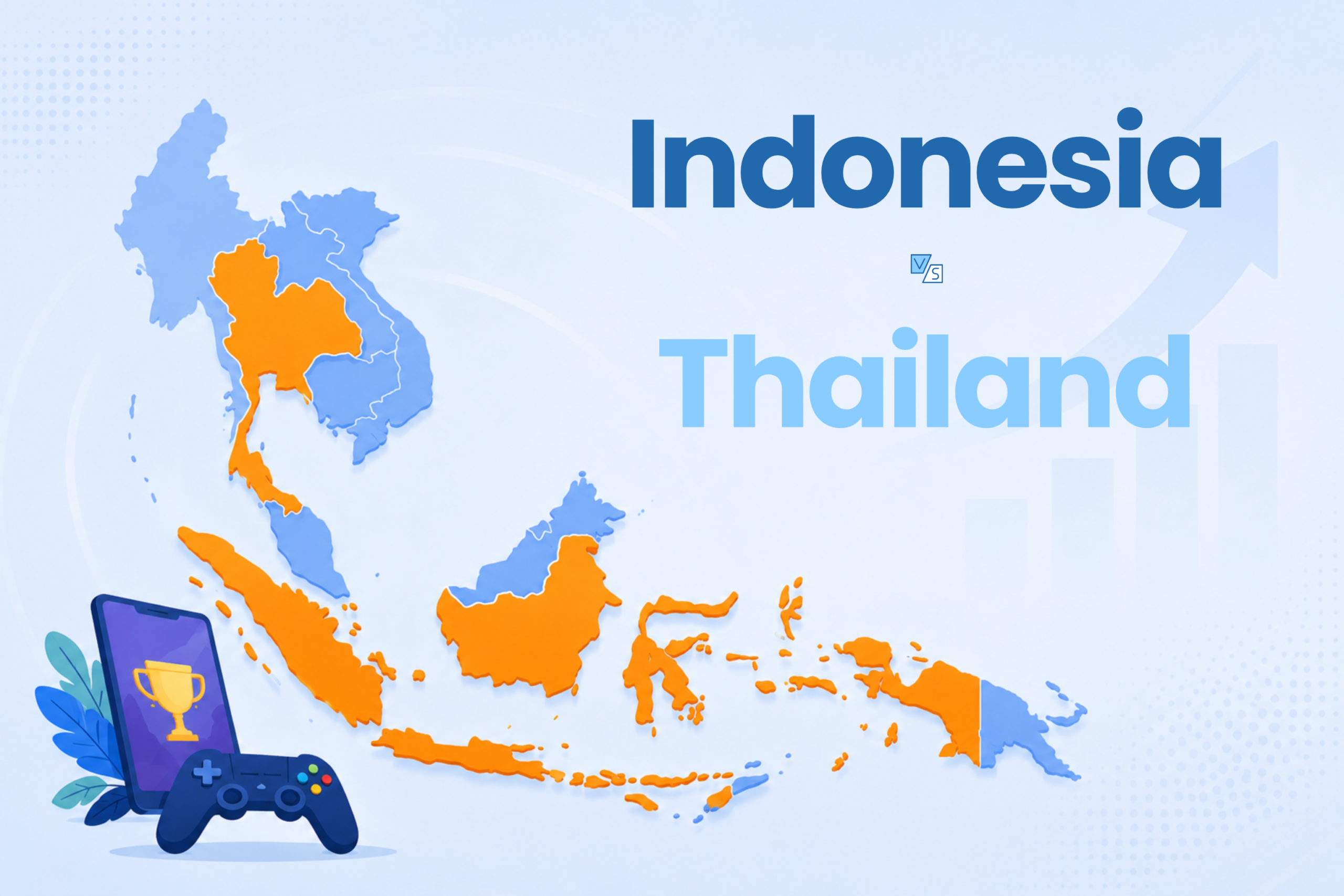
Indonesia
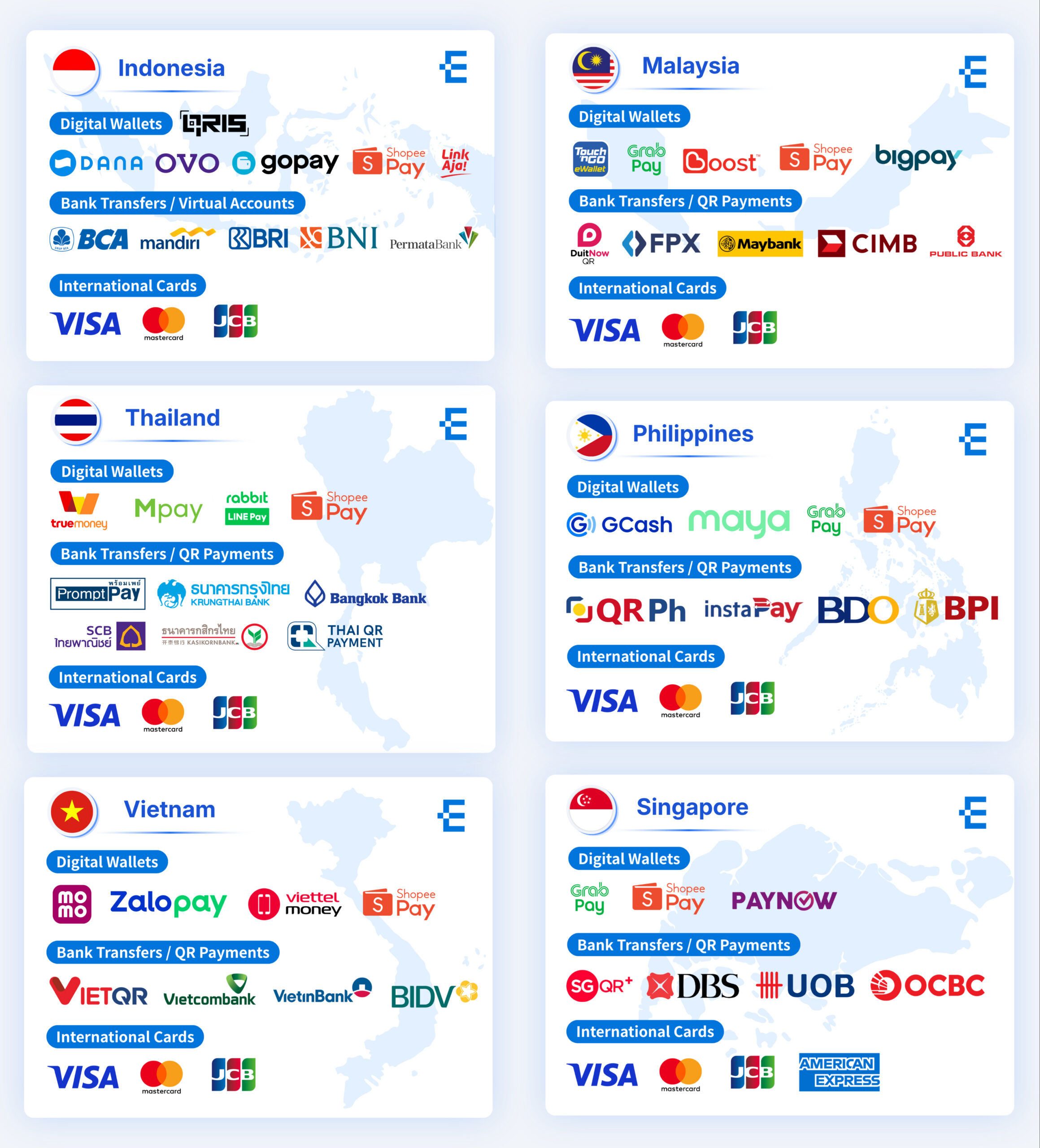
Indonesia’s most distinctive payment rail is QRIS, the national QR standard that connects bank apps and digital wallets through a unified system, making digital payments faster and easier for consumers. Bank transfers and wallets such as GoPay, OVO, DANA and ShopeePay also have broad user bases.
According to Bank Indonesia, QRIS had more than 60 million users in the first half of 2026, with transaction volume reaching 12.55 billion, roughly double the level a year earlier. Over the same period, QRIS transaction value rose 89.52% year on year to IDR 600.69 trillion, or about US$33.5 billion.
For game publishers, Indonesia is best viewed as a high-volume, lower-ticket market. With a large player base and frequent payments, simply adding more card options is unlikely to be enough. Strong coverage of QRIS and leading local wallets, combined with tight control over small-ticket payment costs and success rates, is far more aligned with how the market actually works.
Thailand
In the first half of 2026, Thailand recorded around 300 million mobile game downloads, down 8% from the previous period. Yet in-app revenue rose 4.9% to roughly US$270 million, placing Thailand at the top of mobile game revenue rankings among developing markets.
Thai players have relatively strong spending power, and the country’s payment infrastructure is equally mature.
Thailand has established real-time payment systems such as PromptPay and Thai QR, while digital wallets including TrueMoney and Rabbit LINE Pay sit alongside widespread card usage. By July 2025, PromptPay was processing around 2.36 billion transactions per month, with a total value of approximately THB 4.5 trillion.
For publishers, the focus in Thailand can shift from simply enabling payments to making them faster and easier for existing players. Web shops, QR-based top-ups, repeat purchase flows and the checkout experience for high-value players can all have a direct impact on monetization.
Vietnam
Vietnam recorded around 540 million mobile game downloads in the first half of 2026, with app-store revenue of roughly US$70 million. Industry reports also point out that Vietnam has a relatively high level of third-party payment activity, meaning app-store revenue alone may understate part of the market’s actual monetization.
That is closely tied to how Vietnamese consumers pay.
Alongside digital wallets, bank transfers are widely used. VietQR has become one of the country’s most recognizable QR payment systems, while local wallets such as MoMo, ZaloPay and ViettelPay also enjoy strong awareness. By October 2025, nearly 90 million mobile banking accounts were able to scan VietQR codes.
For publishers, Vietnam is a market where payment design should extend beyond the App Store and Google Play. Bank transfers, VietQR and local wallets often need to be considered alongside traditional in-app payment channels.
The Philippines
In the first quarter of 2025, the Philippines generated around 366 million mobile game downloads and roughly US$73 million in IAP revenue. At the same time, the country’s digital payment infrastructure continued to expand rapidly.
Local payment rails include QR Ph and InstaPay, while wallets such as GCash and Maya are deeply embedded in everyday consumer spending. In 2025, digital payments accounted for 53.32% of total payment value, while digital transaction volume reached 3.94 billion, or around 64.7% of the country’s 6.09 billion total transactions for the year.
For game publishers entering the Philippines, digital wallets and real-time account transfers should be part of the payment mix from the start. They are increasingly important for reaching players through the payment methods they already use in daily life.
Malaysia
Malaysia does not match Indonesia or the Philippines in download scale, but its players tend to have stronger spending power.
In the first quarter of 2025, Malaysia recorded around 129 million mobile game downloads and US$103 million in IAP revenue. Relative to its download base, the market ranks highly in Southeast Asia on RPD — revenue generated per download.
Malaysia also has a broad range of payment options.
Beyond cards, consumers use DuitNow QR, FPX online bank transfers, and digital wallets such as Touch ‘n Go, Boost and GrabPay. In 2025, PayNet processed 8.44 billion digital payment transactions, while DuitNow QR had more than 3 million acceptance points nationwide.
In a more mature market like Malaysia, publishers need to look beyond basic payment coverage and pay closer attention to payment success rates, settlement speed and the checkout experience for higher-value players.
Singapore
Singapore is a smaller gaming market by user volume, but one of the strongest in Southeast Asia when it comes to player spending.
In the first quarter of 2025, the market recorded around 14 million mobile game downloads and approximately US$94 million in IAP revenue. Available data also shows that Singapore remained among the region’s leaders in RPD in the first half of 2026.
The payment environment is equally developed. Singapore has a mature card ecosystem alongside widely adopted real-time payment infrastructure, including PayNow, FAST and SGQR. PayNow runs on the FAST network, enabling 24/7 instant SGD transfers, and is integrated with the SGQR standard. Real-time payments are projected to contribute S$793.2 million to Singapore’s GDP in 2026.
Singapore is therefore best seen as a market where cards and account-to-account payments operate side by side. Publishers can optimize the payment mix based on transaction size, cost and user preference, balancing convenience with economics.