Japan’s Payment Market Is Diversifying — What It Means for Merchants

Home Articles
Tokyo Game Show returns for another year. As one of the world’s largest gaming events, TGS highlights the vibrancy of digital content consumption in Japan, once again bringing online transaction scenarios such as in-game purchases, top-ups, and subscriptions into focus.
High-frequency, recurring online transactions place greater demands on payment method coverage, transaction success rates, the repeat-purchase experience, and risk management.
 
Gaming is only one of the industries where these requirements are particularly concentrated. Across Japan’s online consumer market, merchants often face a more complex and interconnected set of payment challenges: adapting to local payment preferences while also managing local acquiring networks, transaction routing, compliance requirements, and ongoing operations.
 
For overseas companies preparing to enter the Japanese market, the level of localization in their payment capabilities directly affects transaction efficiency and market-entry costs. To understand why this need for localization is becoming increasingly important, it is worth first looking at how Japanese consumers choose to pay.

CHAPTER. 01

Japan’s Online Payment Landscape Is Becoming More Diverse

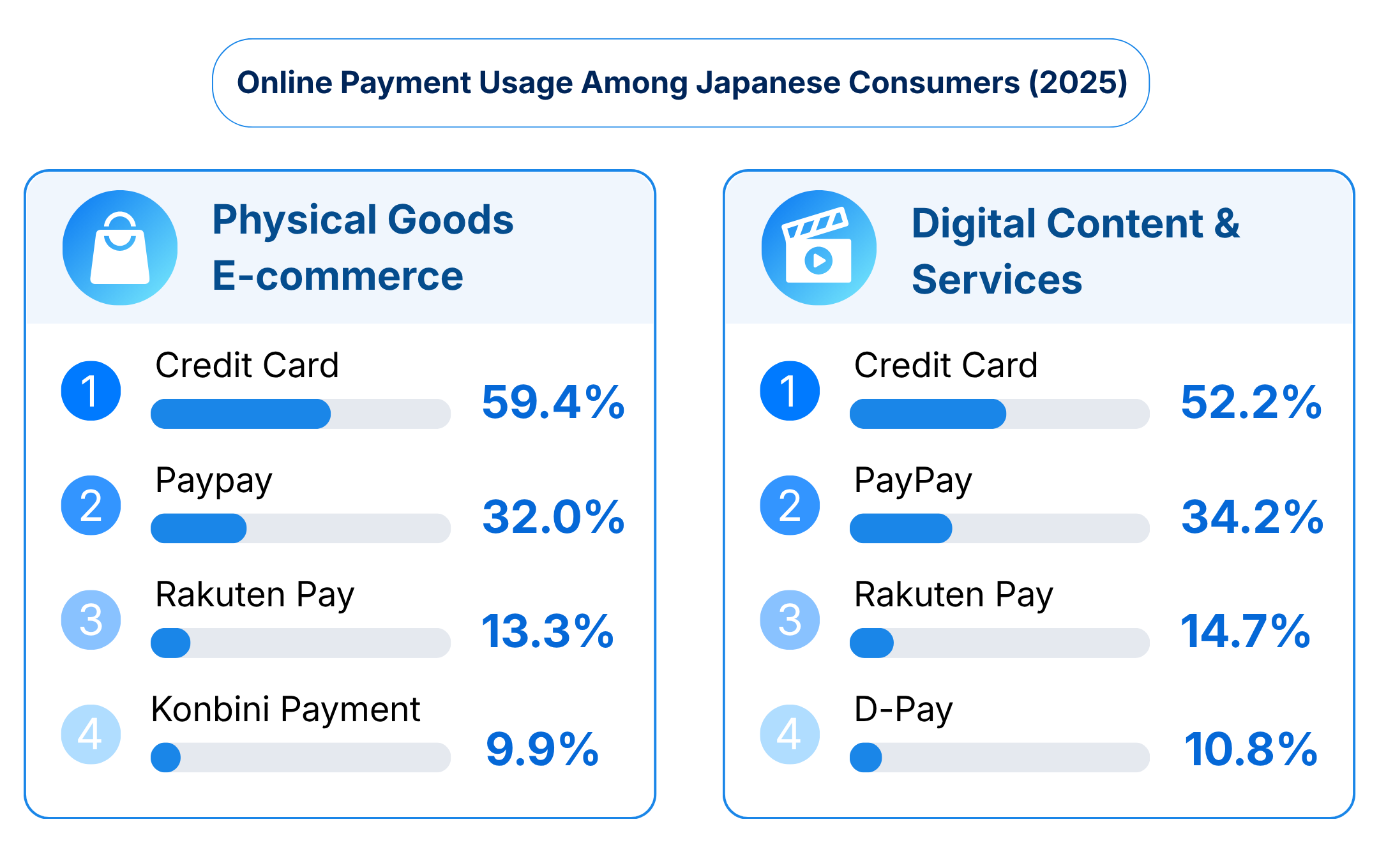
A 2025 survey by SB Payment Service of Japanese e-commerce consumers shows that credit cards remain at the core of the payment market, while consumer preferences across payment brands are becoming increasingly fragmented and the use of local wallets continues to rise.
Over the longer term, credit card usage has been declining, while local brands such as PayPay and Rakuten Pay continue to gain adoption. In the near term, however, credit cards are still expected to remain the dominant online payment method in Japan. The market is gradually shifting from heavy reliance on credit cards toward a more balanced structure in which credit cards and local wallets coexist.
 
In the QR and barcode payment segment, adoption is even more concentrated among leading brands. According to MMD Institute’s July 2026 survey, among users of QR and barcode payments, 66.0% reported using PayPay, 35.3% Rakuten Pay, and 30.8% d Payment. As respondents could select multiple services, these figures represent brand penetration rather than transaction-value market share, but they still provide a useful view of the current user landscape.
 
PayPay, in particular, has expanded well beyond the user base of any single mobile carrier, with more than 75 million registered users. In the SB Payment Service survey, regardless of whether respondents used NTT Docomo, KDDI, SoftBank, or Rakuten Mobile, the two most frequently used online payment methods were consistently credit cards and PayPay.
In Japan’s local payment market, different payment brands are tied to different consumer groups, account ecosystems, and usage scenarios. This directly affects both the breadth of a merchant’s payment coverage and its ability to reach local users.
 
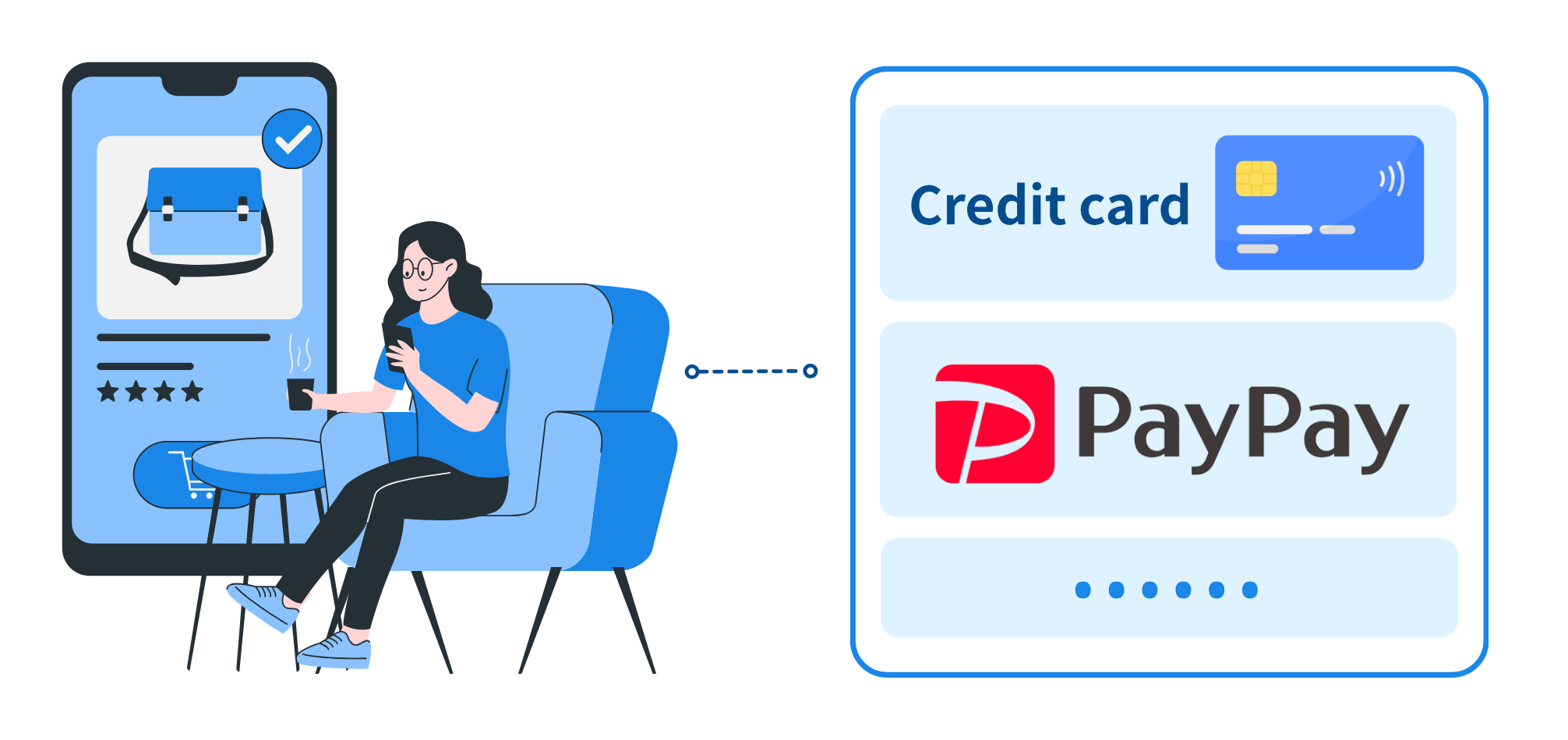
For merchants, this fragmentation ultimately affects payment conversion. Survey findings show that when consumers cannot use their preferred payment method, more than 56.5% will leave the current website. For overseas merchants entering Japan, supporting major local payment methods in addition to credit cards has therefore become an important part of payment localization.

CHAPTER. 02

The User Ecosystems Behind Local Payment Methods

Localizing payments for Japan’s online market goes beyond simply adding a few wallet logos. Different payment brands are connected to distinct user ecosystems.
 
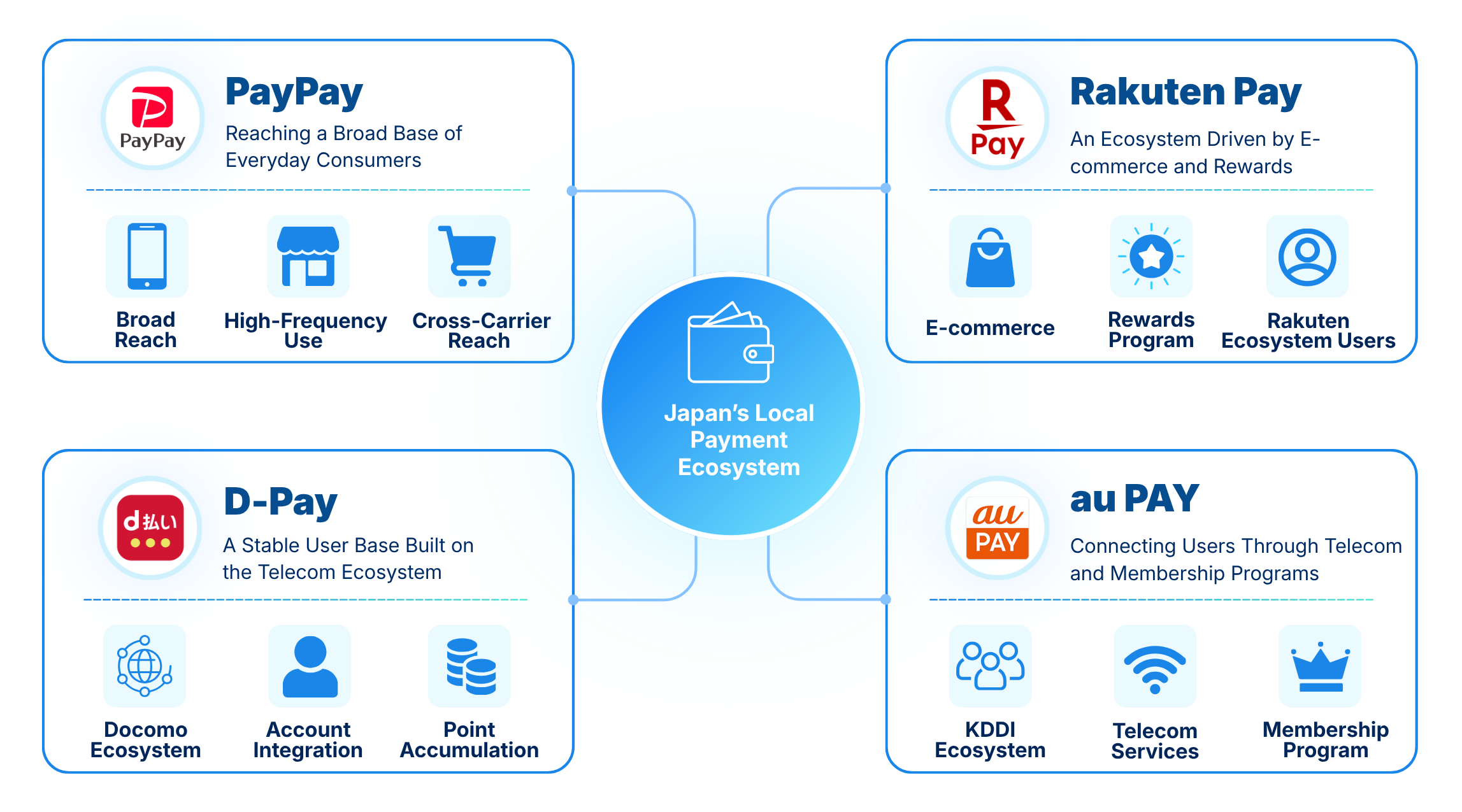
Today, credit cards remain an important payment method across hotels, travel, e-commerce, and higher-value purchases. At the same time, Japan’s long-standing preference for cash and its extensive convenience store network have helped konbini payments remain widely used, particularly for e-commerce and other online purchases.
 
Among local wallets, PayPay continues to expand its user base through broad consumer reach and frequent everyday use cases. Rakuten Pay is closely integrated with Rakuten’s e-commerce and loyalty-point ecosystem, while d Payment and au PAY draw on the telecom, account, and rewards ecosystems of Docomo and KDDI respectively to strengthen user engagement.
The diversity of payment methods also increases the complexity overseas merchants face when entering the Japanese market.
 
Card payments require connections to local acquirers and transaction networks, while local wallets each have their own technical, commercial, and operational frameworks. If merchants contract with and integrate each payment method separately, broader payment coverage can also mean greater system maintenance, contract management, and ongoing operational costs.
 
As a result, the requirements placed on payment service providers in Japan now extend beyond the number of payment methods they support. What matters increasingly is whether they can connect to local acquiring networks, cover major payment ecosystems, and integrate them through a unified technical architecture.

CHAPTER. 03

Building a Local Payment Network in Japan

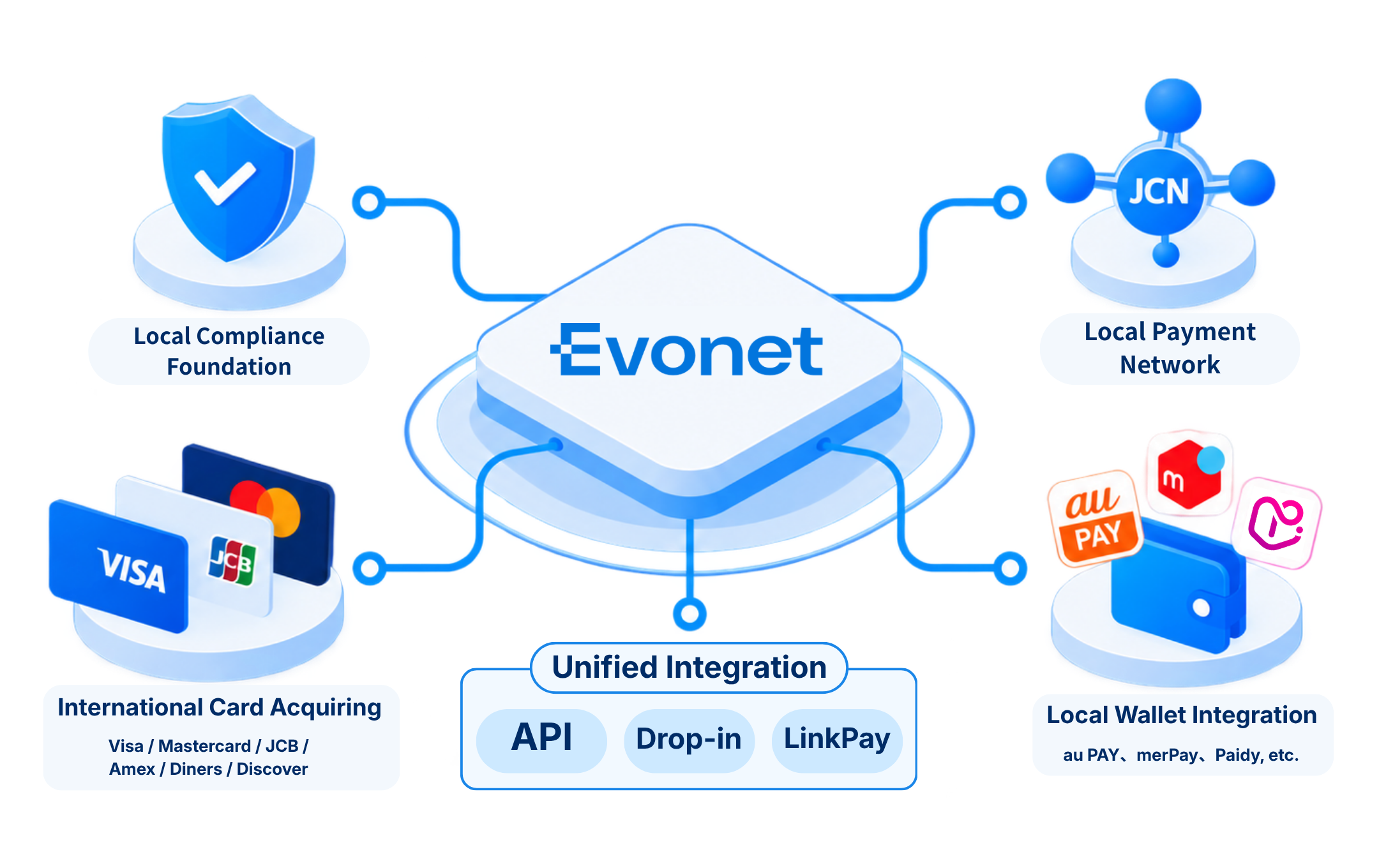
To serve Japan’s highly localized market, where multiple payment ecosystems coexist, Evonet has built payment capabilities spanning local regulatory compliance, international card acquiring, domestic payment networks, and local payment methods.

Local Compliance Foundation

Evonet Global Japan is registered under Japan’s Installment Sales Act as an operator for contracts involving the handling of credit card numbers and related information(クレジットカード番号等取扱契約締結事業者).
 
This registration provides an important compliance foundation for Evonet to conduct credit card merchant-related activities within Japan’s regulatory framework and to further connect with local acquirers and payment networks.

International Card Acquiring

On the card payment side, Evonet is connected to JCN(Japan Card Network), one of Japan’s key payment infrastructure networks, providing the network foundation for connecting and processing domestic card transactions.
 
Building on this network connectivity, Evonet has established partnerships with multiple local acquirers in Japan, including SMCC and JCB, and operates through a comprehensive agency model. This enables online payment acceptance for major card brands including Visa, Mastercard, JCB, American Express, Diners Club, and Discover.
 
Under this model, merchants can authorize Evonet to act as their representative and assist with merchant contracting and related processes with local acquirers, thereby reducing the integration and operational complexity of working with multiple acquiring institutions separately. Connectivity to local networks and multiple acquirers also creates greater flexibility for transaction routing, acquirer selection, and authorization optimization.

Local Payment Methods and Unified Integration

Beyond international cards, Evonet continues to expand its coverage of local payment methods in Japan. It currently supports local channels including PayPay, d Payment, au PAY, Merpay, and Paidy, together with a broader range of options such as konbini payments, Pay-easy, bank transfers, and prepaid cards such as BitCash. Through a unified integration, merchants can connect to both international cards and Japanese local payment channels.
 
Evonet provides integration options including API, Drop-in, and LinkPay, allowing merchants to choose the most suitable approach based on their PCI DSS capabilities, payment page requirements, and technical architecture. This helps reduce the development and operational costs associated with integrating multiple payment channels separately.

CHAPTER. 04

Three Ways Local Connectivity Creates Value

Japan’s payment market is highly localized, and the payment efficiency merchants ultimately achieve depends to a large extent on how their underlying connections are structured.
 
The value of Evonet’s direct connections to local acquirers, payment networks, and wallets goes beyond simply supporting more payment methods. It translates into three areas of merchant value: payment costs, transaction success rates, and market expansion.

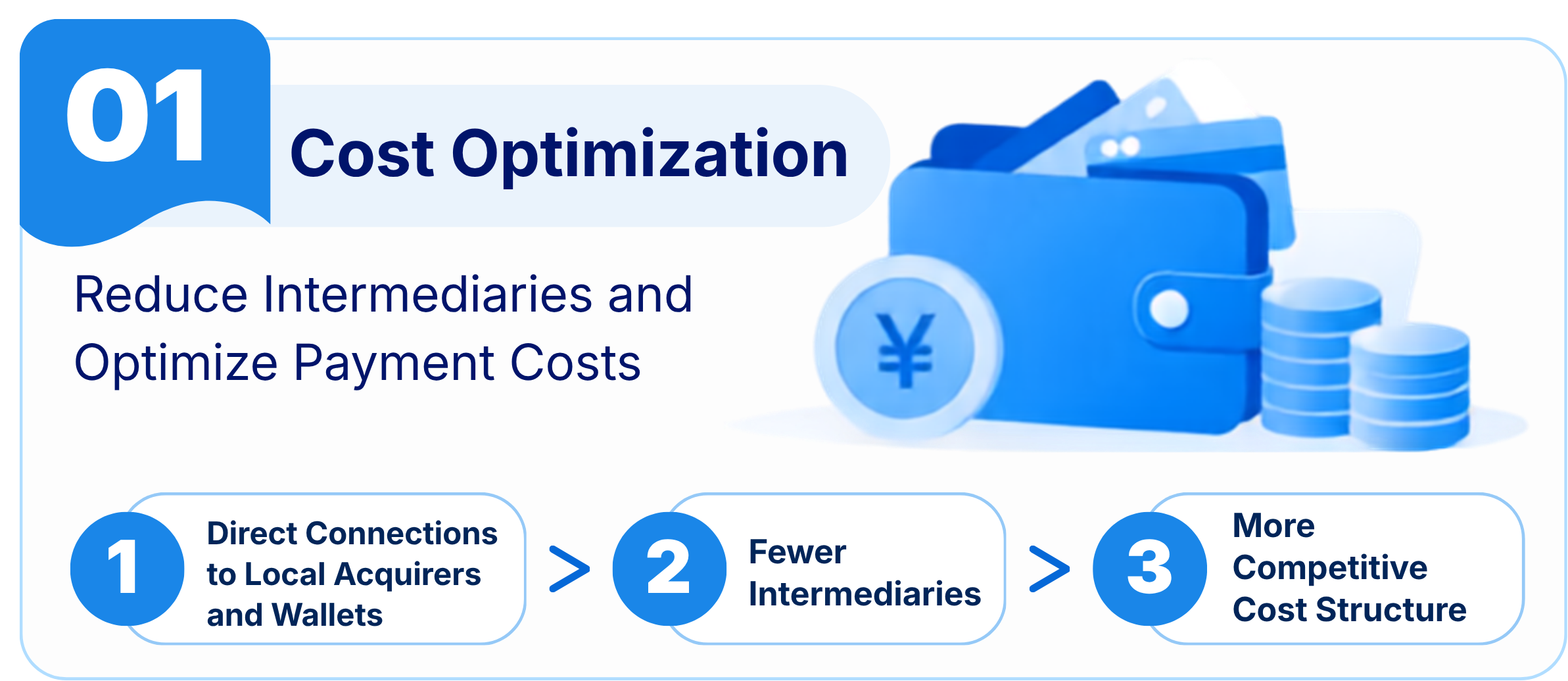
By establishing direct partnerships with local acquirers and wallet operators, Evonet can reduce the number of intermediaries in the payment chain. As transaction volumes scale, a shorter payment chain can create more room for competitive pricing and commercial terms.

For merchants operating in Japan over the long term, cost differences arising from channel structures and partnership models become more significant as payment volumes grow. More direct local connectivity provides greater flexibility to optimize overall payment costs over time.
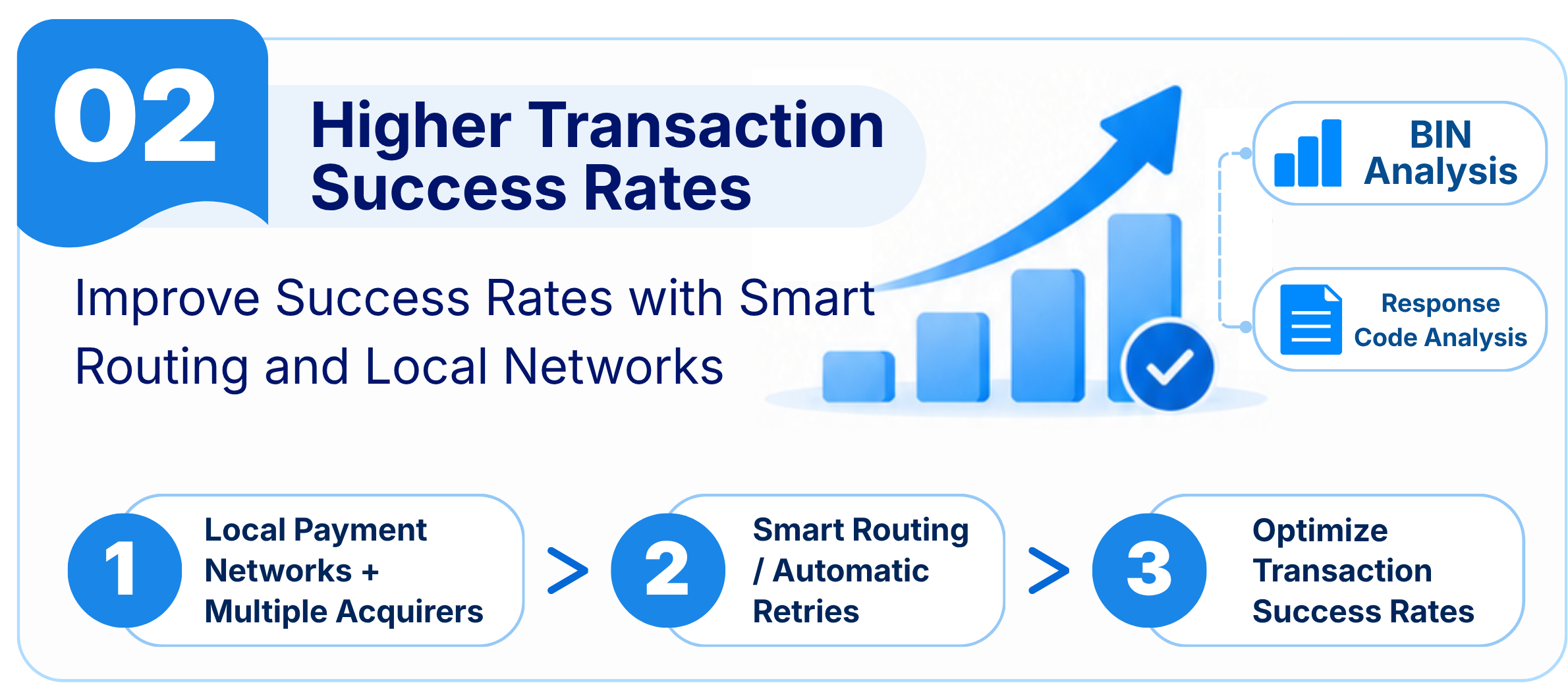
The same transaction can produce different authorization outcomes depending on the acquirer, payment network, and processing strategy used.
 
Evonet currently provides capabilities including smart routing, automatic retries, and BIN and response-code analysis, enabling processing paths to be optimized based on channel performance and transaction characteristics.
 
When these capabilities are combined with connections to Japanese local networks and multiple acquirers, payment optimization can extend beyond simple retries after a failed transaction. Processing can be further adjusted based on acquiring channels, routing rules, and transaction characteristics.
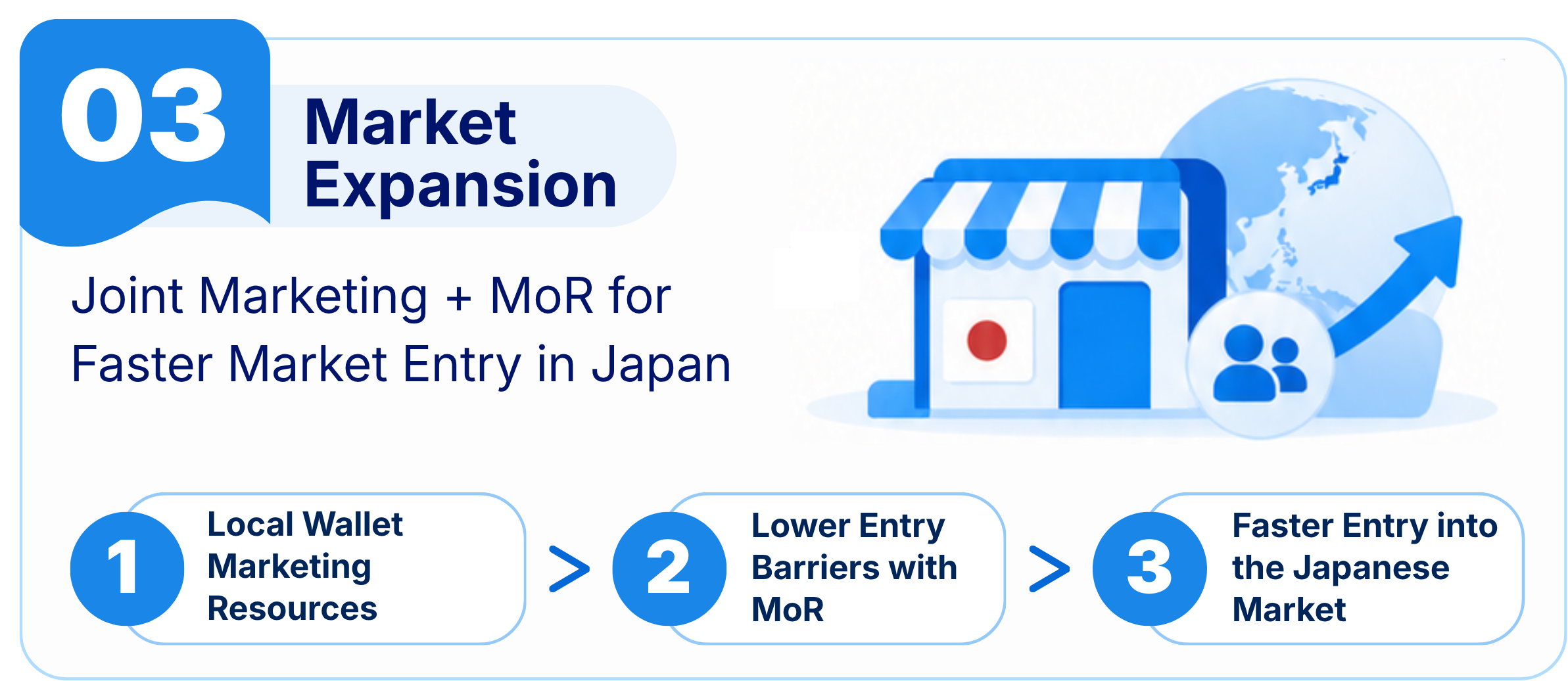
Local wallets in Japan often combine large user bases with their own marketing resources. Through direct partnerships with wallet operators, Evonet can support initiatives such as joint marketing campaigns and coupon programs, helping merchants broaden their reach among local users and improve conversion.
 
For overseas companies entering Japan, payment setup can also involve requirements around merchant entities and local contracting. Some local payment methods require merchants to have a locally registered business entity, which can increase upfront investment and extend time to market.
 
Working with local partners, Evonet can provide Merchant of Record (MoR) support, under which a local entity serves as the merchant of record for relevant transactions and payment acceptance. This can allow overseas merchants to launch in Japan more quickly without first establishing a full local commercial entity and payment setup of their own.

Continuing to Build a More Comprehensive Payment Infrastructure in Japan

Credit cards remain at the core of Japan’s online payment market, while local wallets, QR code payments, and buy now, pay later services are contributing to increasingly diverse consumer payment habits. For cross-border merchants, effective payment localization in Japan requires capabilities across multiple areas, including payment method coverage, acquiring networks, transaction routing, regulatory requirements, and local operations.
 
Evonet continues to strengthen its payment capabilities in Japan along this path. Its local compliance foundation supports connections to Japan’s acquiring ecosystem, while local networks such as JCN enable card transaction processing. Evonet also integrates international cards with local payment methods and extends these capabilities through services such as smart routing, marketing partnerships, and Merchant of Record (MoR) support.
 
Ultimately, these capabilities address three practical questions for merchants: whether they can support the payment methods preferred by local consumers, whether they can process transactions in Japan more efficiently, and whether they can enter the market with lower integration and operating costs.
 
To address these practical needs, Evonet will continue to deepen its local payment network in Japan, helping merchants reduce payment integration complexity while improving transaction and operational efficiency in the Japanese market.

Explore More Payment Possibilities