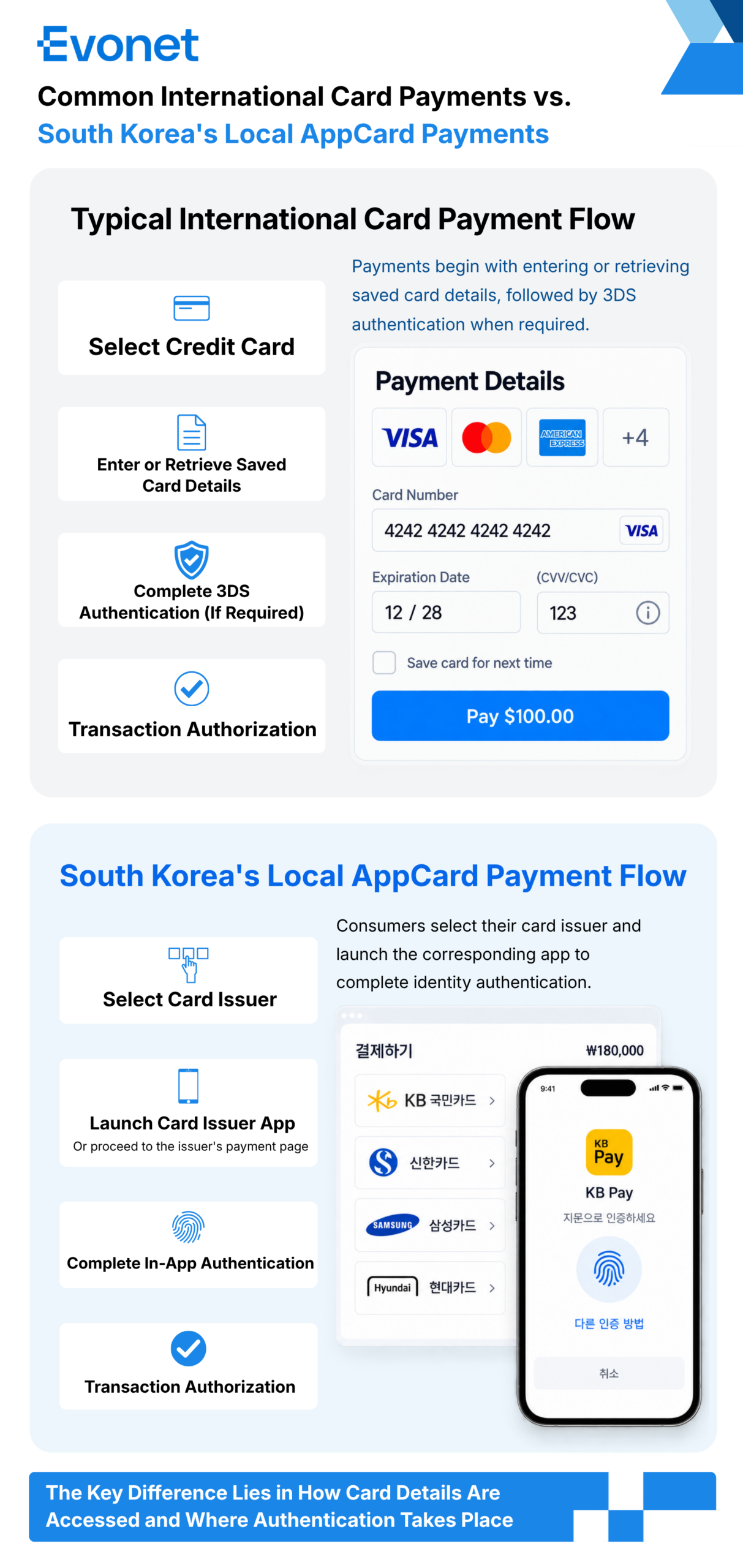
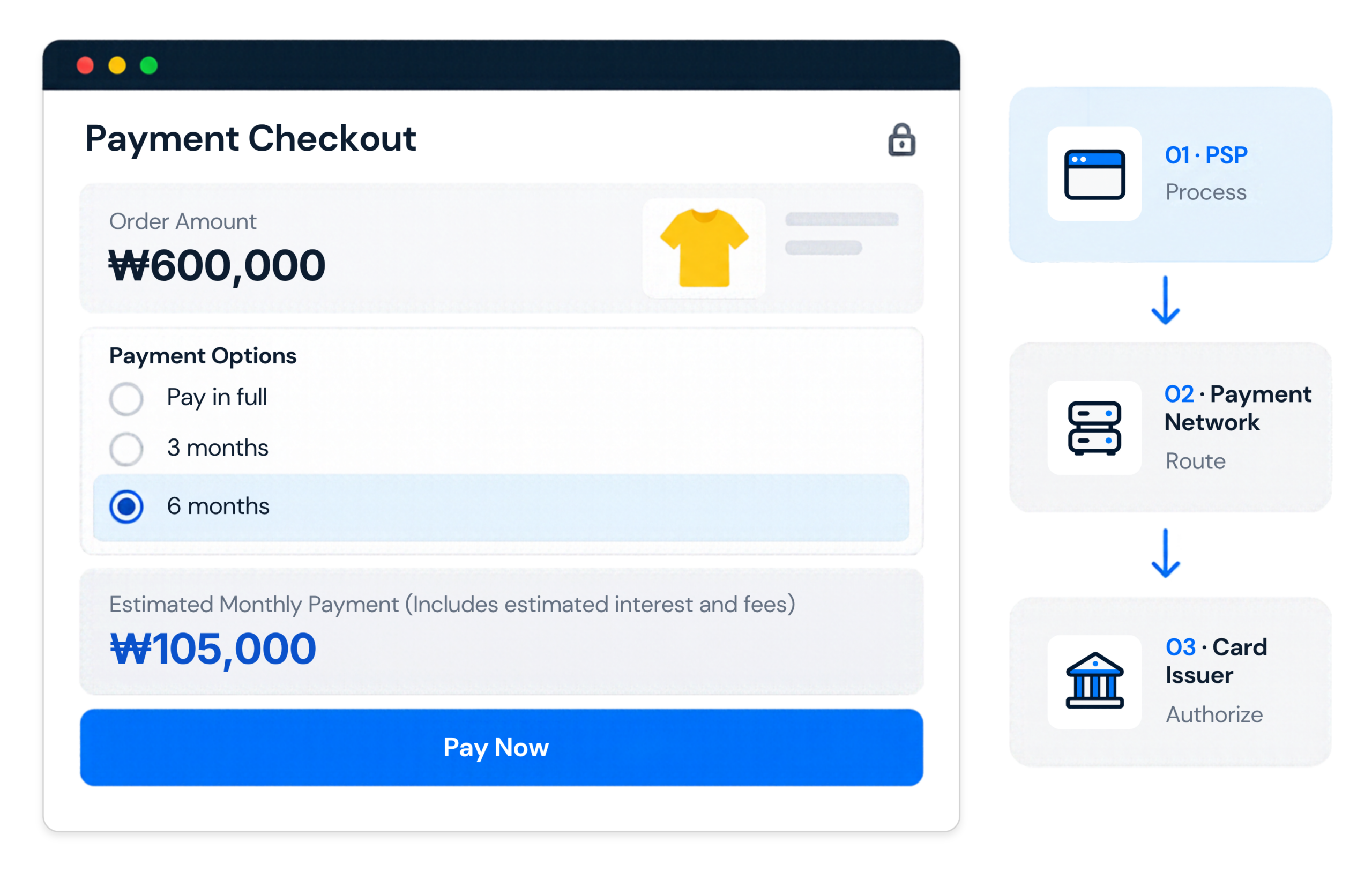
Unlike the typical credit card checkout process on many international e-commerce websites, where consumers manually enter their card number, expiration date, and security code, online shoppers in South Korea typically select their card issuer first and are then redirected to the corresponding app for identity verification.
This eliminates the need to repeatedly enter card details, creating a payment experience similar to using a digital wallet.
This distinctive payment behavior also places additional requirements on localized payment integration in South Korea. Checkout systems need to seamlessly connect with local card issuers’ authentication processes and offer installment payment options, while supporting the digital wallets commonly used by Korean consumers. Understanding this process is an important step in designing a checkout experience tailored to the Korean market.
01 What Makes Online Card Payments in South Korea Different?
AppCard (card issuer app-based payments) is a common method for online card payments in South Korea.
Consumers can register their cards in advance through their card issuer’s app and use their saved card details when making payments. Authentication is completed using a payment PIN or biometric verification, eliminating the need to re-enter the full card number for every transaction. On mobile devices, the app can be launched directly, while PC users can complete verification by scanning a QR code or entering a verification code.
International card payments typically begin with entering or retrieving saved card details, with 3-D Secure (3DS) authentication applied depending on the transaction. South Korea’s local AppCard payments, meanwhile, integrate card issuer selection and app-based authentication into the checkout process, allowing consumers to confirm payments through familiar applications. Both approaches may involve issuer authentication, with the main difference lying in how consumers complete the verification process.
This payment method reduces the need to repeatedly enter sensitive card information while allowing consumers to complete transactions using the authentication mechanisms already available in their card issuer‘s app. Card issuer apps have consequently become an important gateway for online credit card payments in South Korea, shaping a distinctive local payment experience.
02 Who Shapes South Korea’s Local Card Payment Experience?
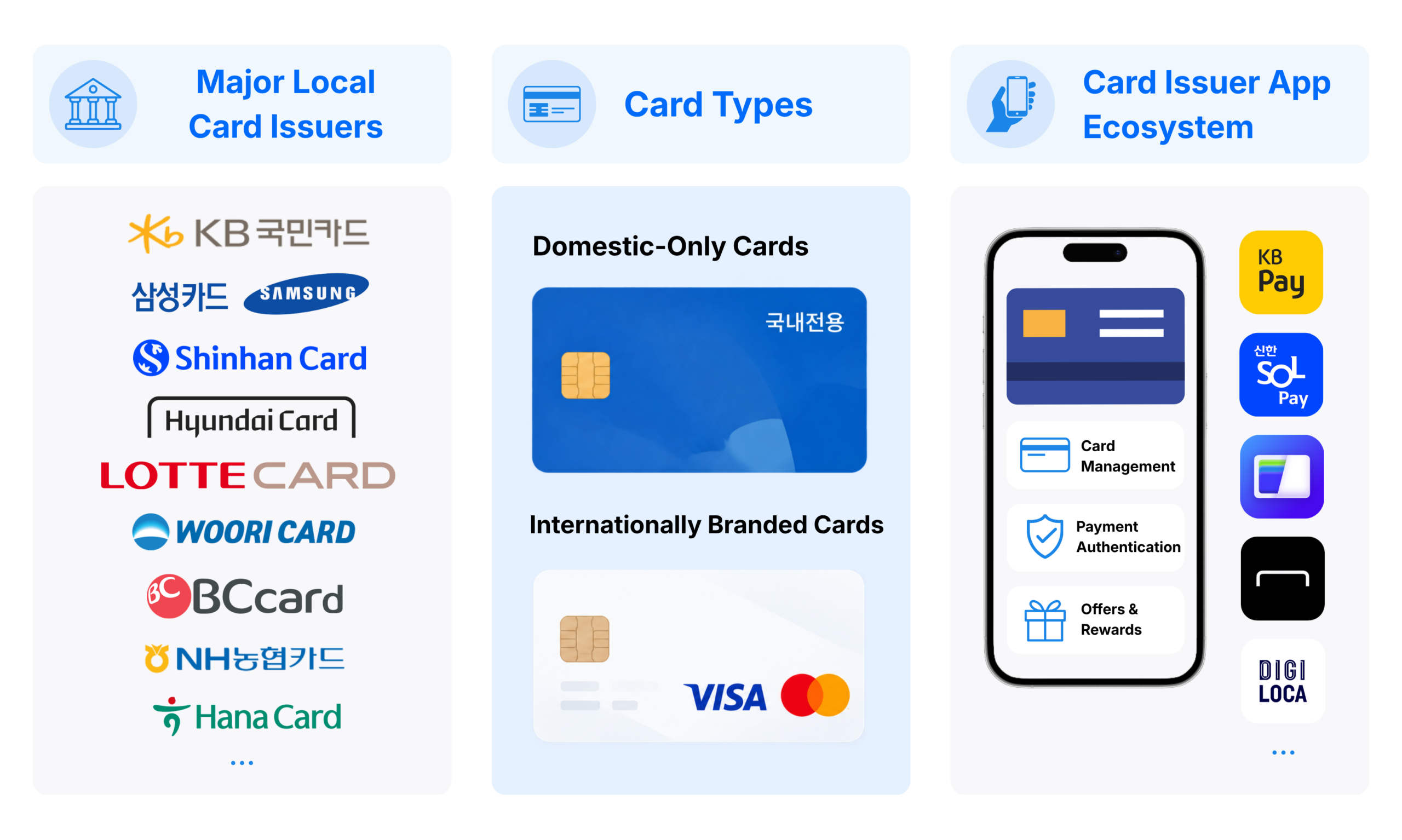
South Korea has a well-established credit card issuing ecosystem, with major players including KB Kookmin Card, Shinhan Card, Samsung Card, Hyundai Card, Lotte Card, Hana Card, Woori Card, NH Nonghyup Card, and BC Card.
South Korea has both domestic-only cards and cards issued in partnership with international card networks such as Visa and Mastercard. Major card issuers also integrate services such as card management, payment authentication, and promotional offers into their own apps, creating a local payment ecosystem in which card issuer apps serve as key payment gateways.
Take KB Pay, developed by KB Kookmin Card, for example. Consumers can access their registered cards directly and verify their identity using a payment PIN within the app, without repeatedly entering their full card numbers.
Beyond launching apps directly on mobile devices, Korean card issuers also offer authentication methods for desktop shopping. For example, Shinhan SOL Pay allows consumers to scan a QR code or enter a payment code on their PC and confirm the payment through the mobile app, supporting online payments across different devices.
While simplifying the payment process, card issuer apps also play an important role in identity authentication. Consumers can verify their identity using a payment PIN or biometric authentication, reducing the need to repeatedly enter sensitive card information across merchant websites. These existing authentication mechanisms also help reduce the risk of unauthorized card use.
03 Installment Payments: A Key Part of South Korea’s Online Checkout Experience
In South Korea’s online shopping environment, credit card installments are an important consideration when consumers choose how to pay.
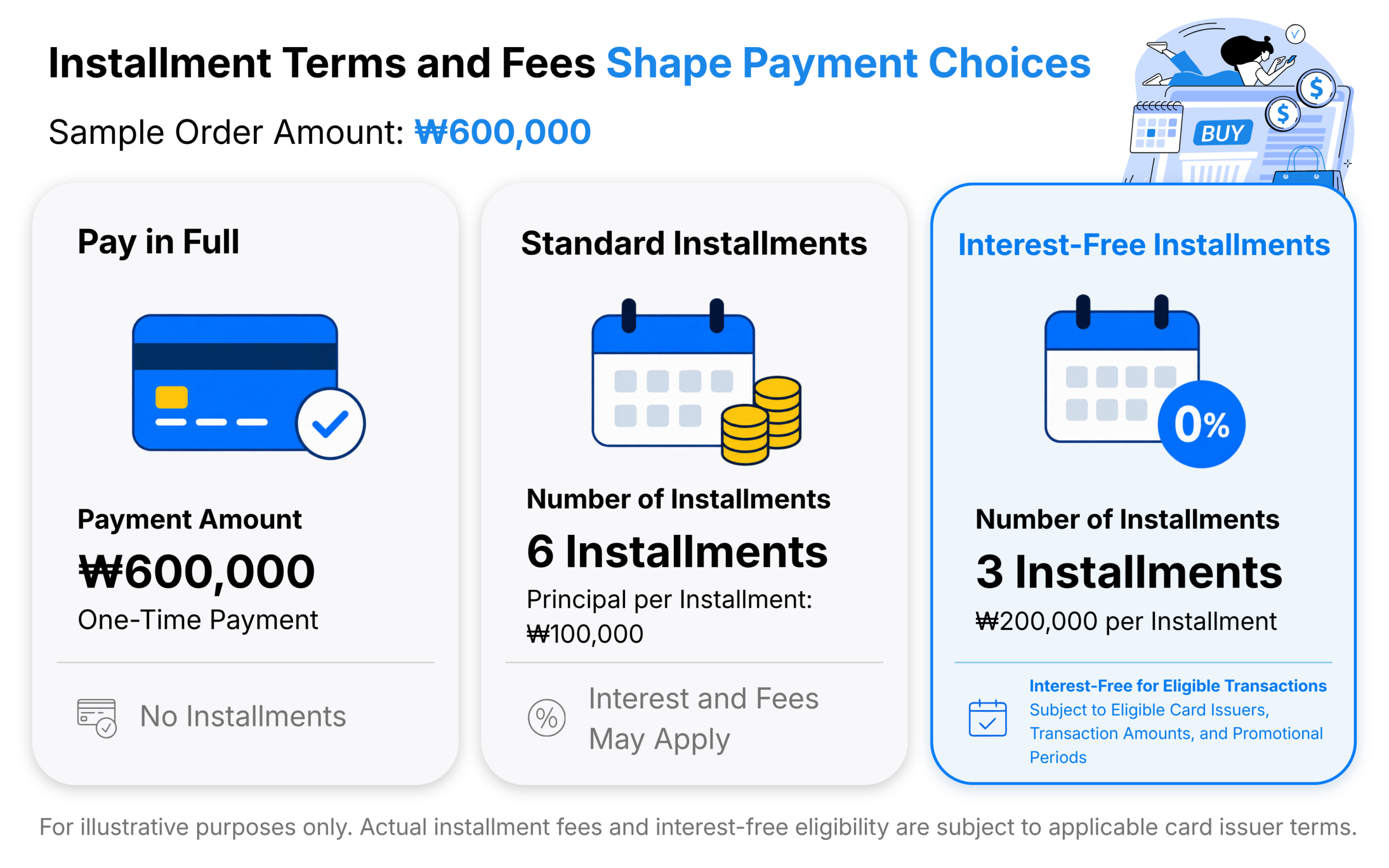
When purchasing higher-value items such as electronics and home appliances, consumers often consider whether installments are available, how many installments they can choose, and whether interest-free offers apply. Different installment plans may involve different payment costs, which can influence purchasing decisions.
Korean card issuers regularly introduce installment promotions tailored to specific spending scenarios.
For example, under a Shinhan Card promotion in August 2026, eligible personal credit cards could receive interest-free installments over two to three months for single transactions of at least KRW 50,000 at designated online merchants. However, consumers who initially paid in full and later converted the transaction into installments were not eligible for the promotional interest-free benefit.
This makes the timing of installment selection important. Consumers need to understand the available installment plans before confirming payment so they can make informed decisions based on costs and repayment arrangements. Displaying installment options directly at checkout allows them to choose their preferred payment arrangement before entering the card issuer’s authentication process.
In this process, the payment service provider (PSP) connects consumers’ installment selections with subsequent transaction processing.
Based on the rules supported by card issuers and payment processing channels, PSPs can display available installment options at checkout and pass the selected installment period and other relevant parameters to the payment processing channel. The available installment periods, interest-free eligibility, and allocation of related fees depend on the card issuer, card type, transaction amount, and merchant agreements.
Offering installment options that align with local payment habits is particularly valuable for cross-border merchants selling higher-ticket products. It helps consumers better understand their payment arrangements, reduces hesitation caused by limited payment choices, and creates opportunities to improve the checkout experience.
04|Evonet Connects South Korea’s Local Card Payments and Digital Wallet Ecosystem
South Korea’s local card payment landscape involves multiple card issuers and payment channels. Integrating with each provider individually requires additional development resources and involves managing different checkout flows and payment rules.
To address these needs, Evonet brings together local card and major digital wallet payment capabilities in South Korea, helping cross-border merchants access the market through more flexible payment integration options.
Comprehensive Coverage of Local Card Issuers
Evonet supports all card issuers in South Korea, helping merchants minimize acceptance gaps caused by limited issuer coverage. Merchants can expand their payment acceptance without integrating separately with each card issuer.
Flexible Checkout Integration Options
Evonet offers two payment modes to accommodate different merchant checkout designs: an aggregated card issuer checkout and a DIRECT mode.
With the aggregated checkout, consumers select their card issuer on a unified page before proceeding to the corresponding payment flow. DIRECT mode allows consumers to proceed directly to a designated card issuer’s checkout, eliminating the intermediate selection step. Merchants can choose the payment flow that best fits their business needs and customers’ payment preferences.
Installment Selection at Checkout
Evonet supports displaying credit card installment options on the checkout page, allowing consumers to select an eligible installment plan before confirming payment. The selected installment parameters are then passed to the subsequent payment processing flow. Available installment periods and promotional terms are subject to the applicable rules of card issuers and payment processing channels.
Connecting Major Local Wallets and Card-Linked Payments
Beyond local credit cards, Evonet also supports major digital wallets in South Korea, enabling consumers to pay using cards linked to their digital wallets.
In practice, Evonet has helped gaming industry clients integrate Japanese and Korean local wallets, including Kakao Pay and Naver Pay. This expands payment options for in-game purchases and enables merchants to offer more payment methods familiar to local consumers.
Conclusion
Card issuer apps, installment services, and digital wallets have become important parts of the online payment experience in South Korea.
By integrating these local payment capabilities into merchant checkout flows, Evonet helps cross-border businesses reduce the complexity of connecting multiple payment channels while offering Korean consumers payment options aligned with their local preferences.
Explore Evonet’s local payment solutions for South Korea. Contact us to learn more.